


ELECTROMAGNETIC STIRRING AND INDUCTION HEATING
SOLUTIONS FOR THE STEEL INDUSTRY
Rotelec develops electromagnetic technologies for critical stages of steel production, from liquid-steel processing and continuous casting to hot rolling and finishing lines.
At the core of every Rotelec solution is the same principle: using electromagnetic energy to control a specific process condition without direct mechanical contact with the steel.
Depending on the application, electromagnetic energy can be transformed into force, to control the movement of liquid steel, or into heat, generated directly within solid steel. These two technology families, Electromagnetic Stirring and Induction Heating, form the foundation of the Rotelec product portfolio.

ELECTROMAGNETIC STIRRING
Controlling liquid steel through electromagnetic forces
Rotelec Electromagnetic Stirring technologies use electromagnetic forces to control the movement and flow of liquid steel without mechanical contact with the metal.
Depending on the application and process stage, these forces can generate rotation, guide the liquid steel, accelerate or slow its movement, or stabilize the flow. The required solution changes according to the geometry of the product and the point where electromagnetic control is applied.
For billet and bloom casters, compact sections allow rotative stirring systems to act in the mold, along the strand or in the final solidification zone. For slab casters, the wide and flat geometry requires linear electromagnetic systems capable of controlling mold flow or acting further along the strand during solidification.
Rotelec electromagnetic stirring expertise also extends beyond conventional continuous casting. In Electric Arc Furnaces, electromagnetic stirring can be used to control circulation within the liquid-steel bath according to the requirements of the steelmaking process.
Across these applications, the objective is the same: control liquid-steel behavior at the process point where it can most effectively support metallurgical quality, process stability and productivity.
DISCOVER MORE
EMS FOR BILLET & BLOOM CASTERS →
ELECTROMAGNETIC STIRRING & BRAKING FOR SLAB CASTERS →
OTHER EMS APPLICATIONS →
INDUCTION HEATING
Generating heat directly within steel
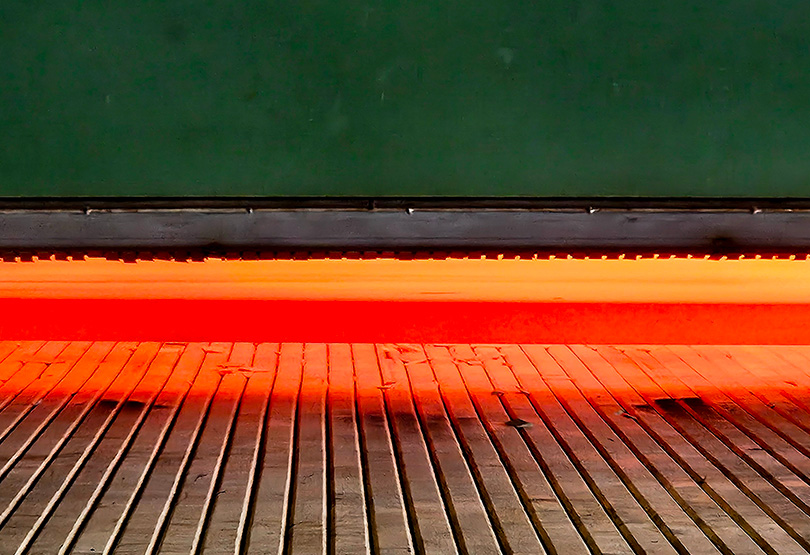
Rotelec Induction Heating technologies use alternating electromagnetic fields to induce electrical currents directly inside steel. The electrical resistance of the material converts these currents into heat, allowing thermal energy to be generated within the steel itself rather than transferred from an external flame or heated surface.
This non-contact heating principle combines fast response, precise control and high power density, making it possible to address different thermal requirements along the steel-processing route.
In hot strip mills, induction heating is used to control the thermal condition of the transfer bar before final rolling. Depending on the process requirement, Rotelec technologies can compensate for localized temperature losses or provide broader temperature control across the steel section.
In finishing lines, Rotelec develops dedicated heating solutions for continuous steel strip, where rapid response, thermal control and integration with the line process are essential. The specific technology is selected according to the application and the thermal objective.
Because induction heating does not require local combustion, it can also support plant decarbonization strategies when powered by low-carbon electricity, while providing the flexibility and low thermal inertia required by modern continuous production lines.
The objective is a defined thermal condition, reached at the right point of the process and controlled to the level the application requires.
DISCOVER MORE
ONE ELECTROMAGNETIC EXPERTISE.
TWO WAYS TO CONTROL THE PROCESS.
Whether electromagnetic energy is used to control liquid-steel flow or to generate heat within solid steel, every Rotelec solution starts from the same point: understanding the process and applying electromagnetic technology where it can deliver the required metallurgical and operational result.